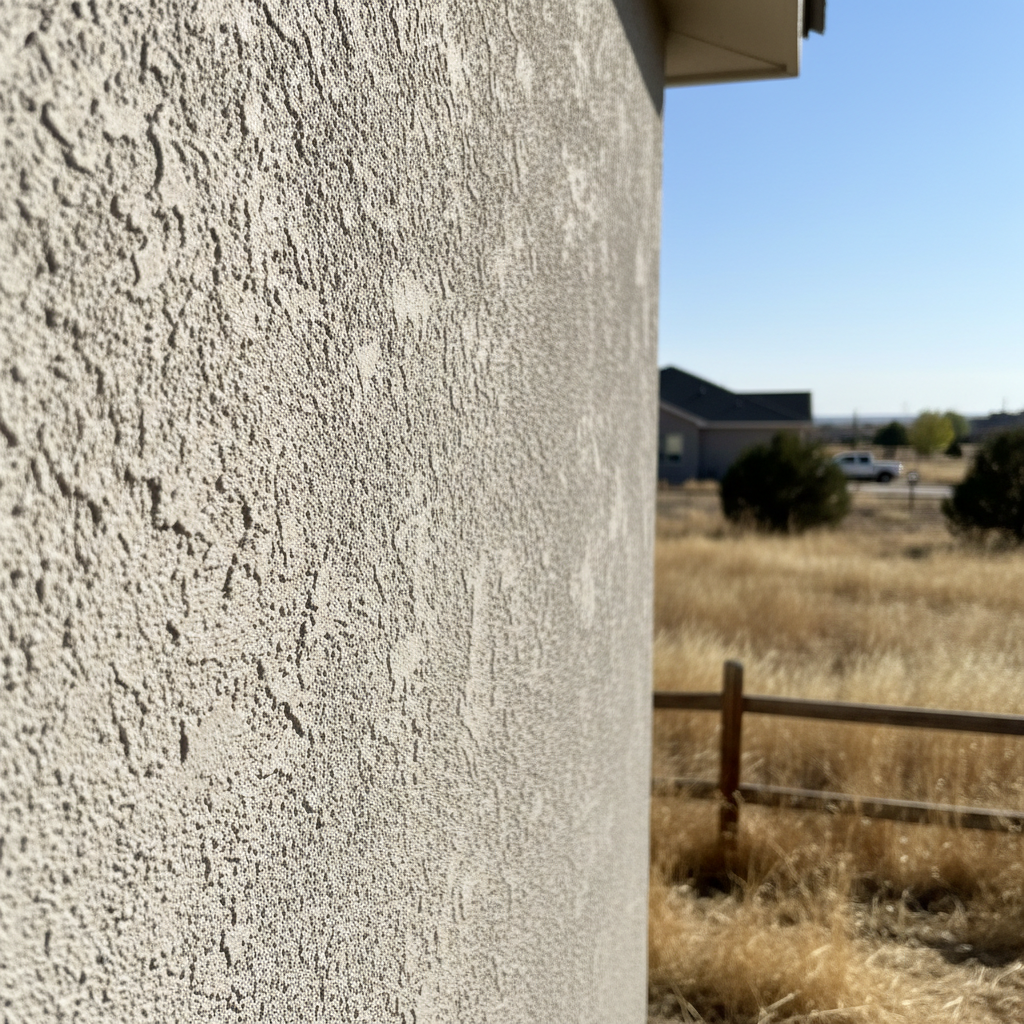
Ever walk around your house and actually look at the walls? Most people do not until a chunk falls off or a mysterious stain appears. If you live out here in West Jordan, your exterior takes a beating from the heavy winter snows off the Oquirrh Mountains and the blazing summer heat that bakes our local clay-heavy soil. Spotting small issues early saves you thousands of dollars. Here is how you can run a solid DIY check on your stucco, what tools you need, and when you should step back and call in someone who does Stucco Repair every day.
Before You Start: The Ground Level Walkaround
Grab a notebook and walk the perimeter of your house. You do not need a fancy ladder for the first pass. Just look at the base where your stucco meets the concrete foundation. In neighborhoods like Copper Hills or near Jordan Landing, settling happens. Check if the weep screed—that little metal strip with drainage holes at the bottom of the wall—is clear of dirt, mulch, and landscaping rocks. If dirt piles up against that weep screed, moisture gets trapped inside the wall with nowhere to go. That is enemy number one for Utah homes.
During the Inspection: Getting Up Close
Now that you have done the fast sweep, take a closer look at the field of the wall. Hairline cracks happen as houses settle. Anything under the width of a credit card is usually normal shrinkage. But if you see stair-step cracking near windows or doors, or cracks wider than a nickel, make a note of it. Take photos with a coin next to the crack for scale. Check around every single window frame and door trim. Caulking fails out here faster than you would think because of our dry air and temperature swings. If the sealant is pulling away, water is getting behind the finish coat.
We see a lot of synthetic stucco or EIFS systems where homeowners forget to check the penetrations. Look at where your hose bibs, light fixtures, dryer vents, and gas lines punch through the wall. Every single one of those needs a tight seal. Tap gently on the wall around those openings with the plastic handle of a screwdriver. It should sound solid. If it sounds hollow or papery, the foam or lath behind the surface might have detached from the substrate.
What You Can Handle vs. Calling Mountain Stucco
Let us be realistic about DIY limits. You can easily clear out your landscaping, scrape away old failing caulk around windows, and wash down dusty walls with a gentle garden hose. Do not blast your stucco with a high-pressure commercial power washer. You will blast right through the finish coat and force water into tiny voids. If you find minor hairline cracks, you can brush on a specialized elastomeric masonry patch. But if you spot bulging areas, dark staining that smells musty, or soft spots where the wall gives under pressure, stop right there.
That is when you need professional eyes. Moisture behind stucco rarely dries out on its own in our climate, especially on north-facing walls that stay shaded in the winter. Mountain Stucco uses thermal imaging and pinless moisture meters to see what is happening beneath the surface without tearing your house apart. A quick fix on a small flashing leak today prevents a massive framing repair next year. Keep an eye on your walls twice a year, stay ahead of the weather, and call Mountain Stucco for Stucco Repair work in West Jordan, Utah.