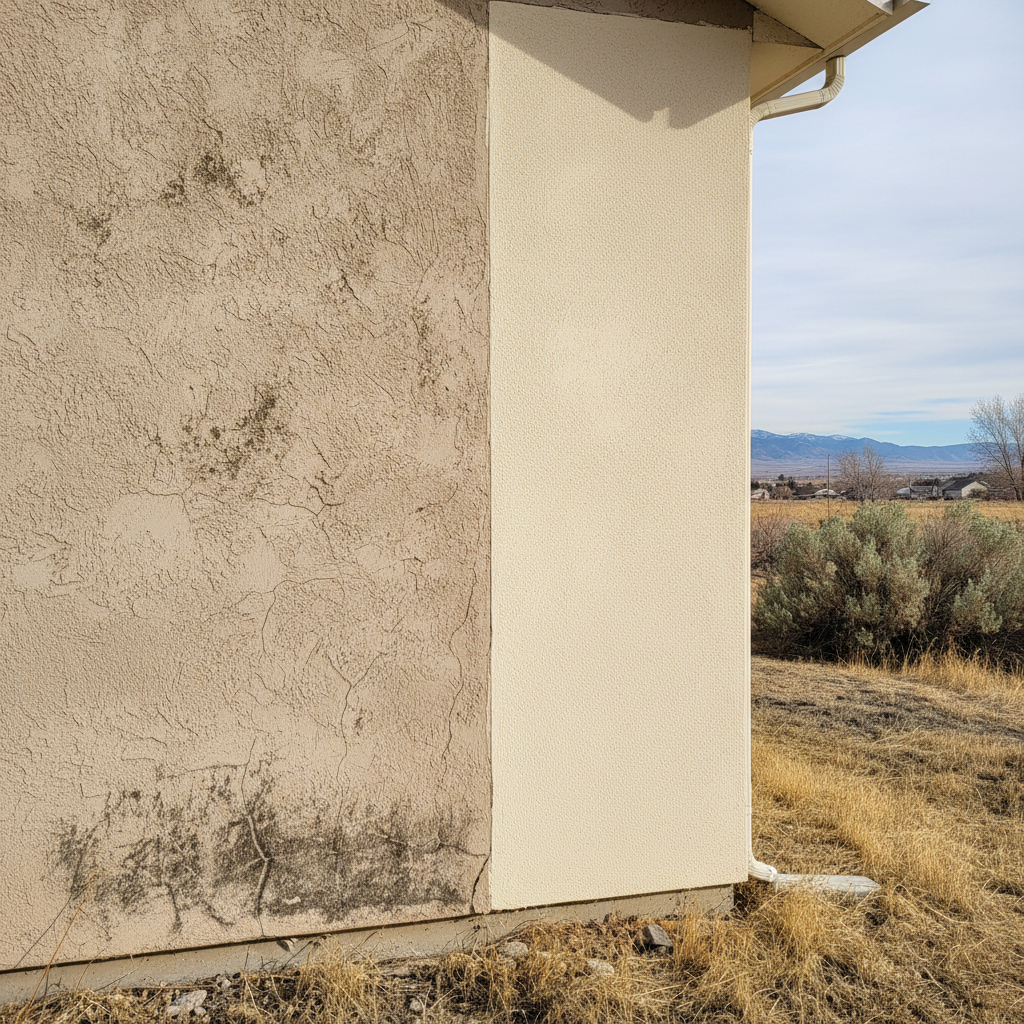
Deciding how to clad or re-do the exterior of your house is a major choice. Around West Jordan, Utah, where we deal with scorching summer sun and freezing winter nights, the choice usually boils down to two main options: traditional three-coat hard coat stucco or synthetic EIFS (Exterior Insulation and Finish System). Mountain Stucco has worked on both options across local neighborhoods from Sunset Ridge to old town, and each has distinct pros and cons.
Traditional Three-Coat Stucco: The Heavyweight Standard
Traditional stucco uses a wire lath, a scratch coat, a brown coat, and a finish color coat. It is thick, heavy, and built like a tank. Mountain Stucco sees this system on a huge portion of homes in the Salt Lake Valley because it stands up exceptionally well to physical impacts.
- Cost: Generally more affordable upfront during installation compared to synthetic systems.
- Durability: Highly resistant to impact from stray baseballs, hail, or lawn equipment. It handles our intense UV exposure without breaking a sweat.
- Maintenance: Homeowners will get some hairline cracking over the years as the framing shifts and the ground settles through seasonal moisture changes, meaning you will need minor caulking and patching every few seasons.
Synthetic Stucco (EIFS): The Modern Insulator
Synthetic stucco looks similar from the curb, but underneath the finish coat, it is an entirely different system. It includes a layer of foam insulation board attached to the substrate, a base coat with reinforcing mesh, and a textured finish.
- Cost: Usually carries a higher price tag upfront due to the extra insulation layers and specialized application steps.
- Durability: It does not crack as easily from structural settling because of the reinforcing mesh. However, it can puncture easier if something heavy impacts it hard.
- Maintenance: Highly resistant to weather cracking, but you have to be militant about keeping window seals and flashing watertight. If moisture gets behind EIFS, it traps it against the framing.
Making the Call for Utah's Climate
If you live out near the bench areas where spring winds howl and winter freeze-thaw cycles put masonry to the test, moisture management is very important. Traditional stucco breathes better, letting trapped vapor escape easily. Synthetic systems offer superior R-value insulation, keeping your utility bills lower during those freezing January inversions, but they demand flawless installation to prevent moisture retention.
For most homeowners wanting straightforward, low-stress longevity without worrying about hidden water issues, traditional hard-coat stucco remains the crowd favorite in our valley. If energy efficiency is your top priority and you are willing to invest in meticulous flashing and maintenance, synthetic is worth considering.